Air Brake Before or After the Second Flip?
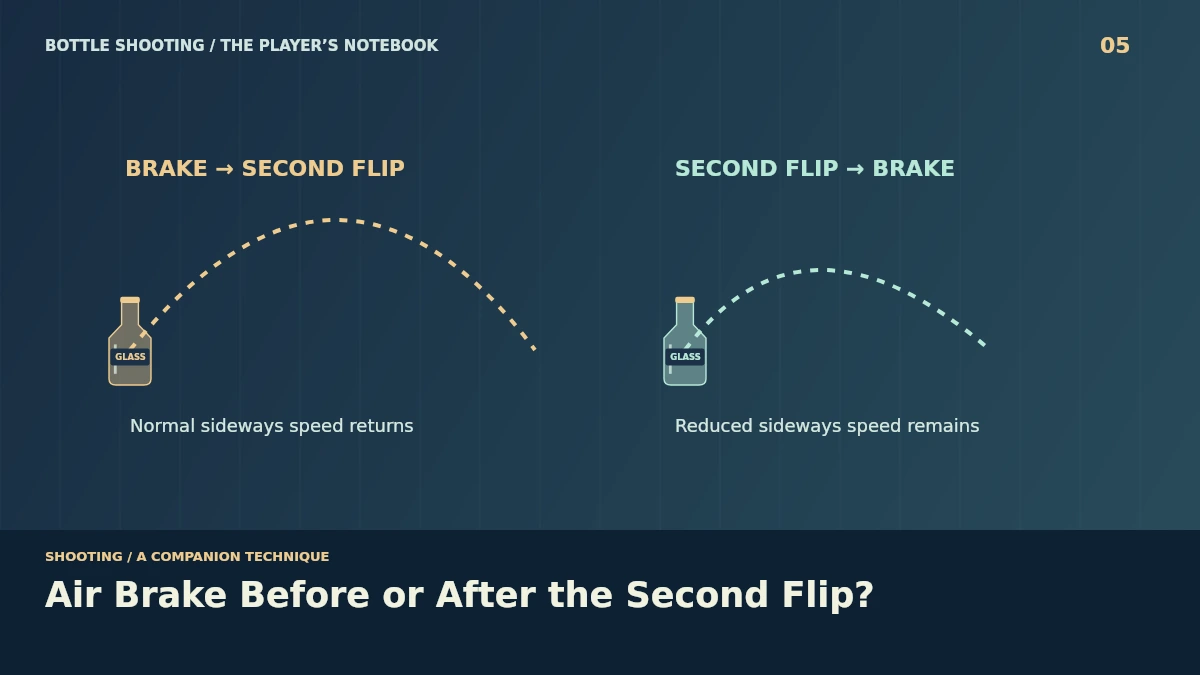
Using both controls can give two different flights. The second flip resets horizontal speed, so the order matters when you want a shorter landing.
The bottle has enough height but too much distance. In Bottle Flip, the air brake reduces current sideways speed to 48 percent, making it relevant when you are about to pass the destination shelf.
The second flip restores the jump speed
Every flip assigns the room's normal horizontal velocity. If you brake first and then trigger the airborne flip, that later input replaces the reduced speed rather than preserving the slower sideways movement you just requested.
The brake remains marked as used. You therefore cannot restore the shorter flight by pressing it again during that same jump, even though the second flip has returned the bottle to normal horizontal travel.
Try reversing those two inputs. Use the second flip to obtain the renewed upward motion first, then brake while airborne if you want to reduce the sideways speed for the remaining part of the crossing.
The brake changes distance, not vertical motion
Gravity keeps acting after you brake. The control does not hold the bottle above a shelf or give another upward impulse, so a low descending bottle may still fall short of a high platform despite the slower travel.
Separate those two observations during practice. If the bottle lacks height, review the second jump; if its descent crosses the shelf beyond the far edge, consider when the brake reduces the remaining horizontal distance.
There is one brake use per flight
The disabled state tells you it is spent. Pressing the button again cannot stack another 48-percent reduction, which makes the first use a commitment for that airborne sequence rather than a repeating speed control.
A valid landing makes it available again. The next jump begins a fresh flight with its own brake allowance, letting you make a separate correction for the following gap instead of saving the control across the whole room.
Imagine two nearby low cabinets as a drill. Brake after your second flip on the first crossing, land, then inspect the next gap before deciding whether that new flight needs the same input order or only one jump.
Compare crossings from the same starting shelf
Keep the destination unchanged for the comparison. Changing to a different piece of furniture at the same time makes it harder to separate the effect of input order from the height and width of the new landing.
Take the first useful landing as evidence. You can improve center placement afterward, once the sequence gets the bottle onto the shelf without an extra tap that restores more sideways speed than the crossing needs.
Revisit the second-jump timing guide for vertical decisions, or read which landings award points again before repeating a route for score. The loft appears in the shooting category, with more bottle games on the Bottle Shooting homepage.