Timing the Second Jump in Bottle Flip
The second tap changes the flight you already started. Save it until you can see whether the bottle needs more height or a longer crossing.
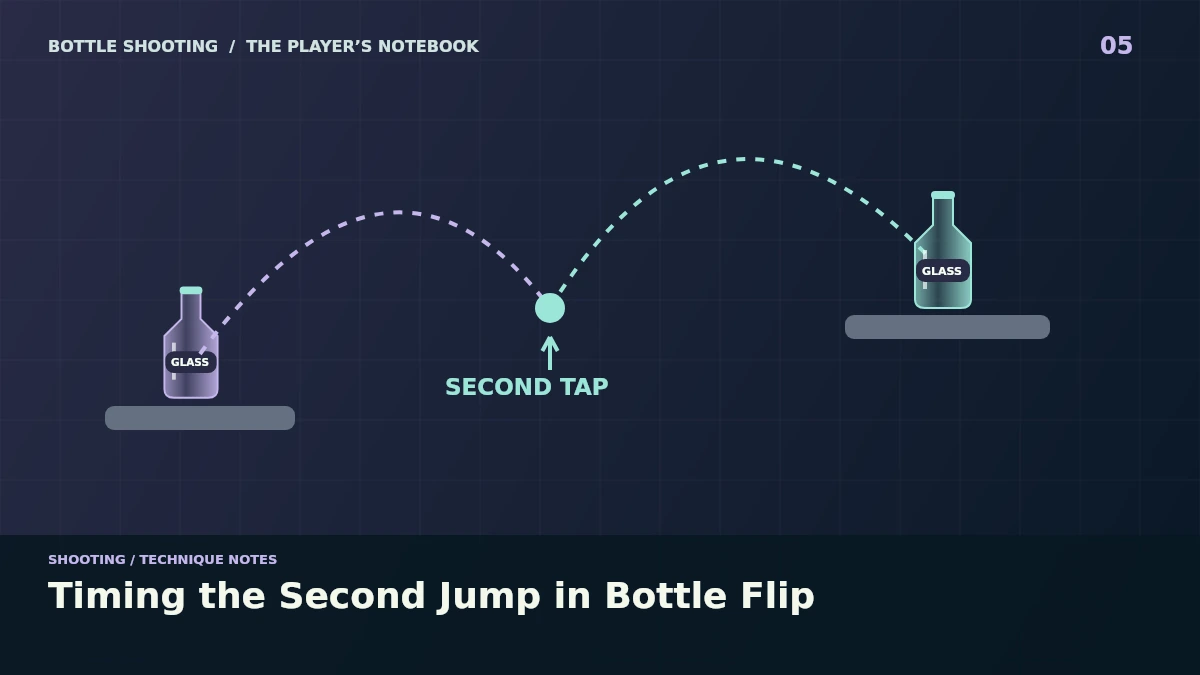
Two quick taps use both jumps early. In Bottle Flip: Moonlit Loft, the second flip replaces upward velocity rather than adding a fixed bonus to whatever motion the bottle already has.
Read the shelf before tapping again
The first jump starts at minus 455. The airborne flip resets vertical velocity to minus 405 internal units per second, while gravity pulls downward at 1,000 units per second squared throughout the flight.
Wait for a useful decision point. Near the top of the first arc, a second tap restores upward motion and extends the time available to travel sideways toward the next piece of furniture.
Tapping later changes the result again. A bottle descending toward a low shelf can rise away from that landing after the second flip, so an extra tap can turn a reachable surface into an overshoot.
The bottle needs room for its base
An edge touch does not qualify. The landing check requires ten internal units on either side of the bottle's center to fit within the platform as the bottle crosses its top while descending.
Aim for a patch of shelf. Trying to scrape the outer corner can fail even when the illustration looks close, because the game checks the base against the platform's available width during descent.
A centered first landing earns more. If the bottle lands within 18 units of the platform center, that new platform awards 120 points; another valid first landing there awards 40 instead.
Second jump or air brake?
These inputs solve different misses. A second flip renews upward motion and restores the stage's horizontal jump speed, while the air brake reduces existing sideways velocity to 48 percent once per flight.
Suppose the next cabinet sits below you. If you have enough height but will travel beyond its far edge, the brake is the more relevant correction than using the second jump to remain airborne longer.
Check the order of your inputs. A double flip after braking resets horizontal speed to the normal jump value, so using those controls in the opposite order can undo the distance reduction you intended.
A short drill for the reading corner
Start with a single flip first. Watch the bottle's descent toward the next shelf, then retry with a second tap near the apex and compare how far you travel before returning to shelf height.
Keep the destination the same. The comparison helps you recognize a gap that needs renewed height, while leaving the brake available for a crossing that has enough lift but too much sideways travel.
Continue with moving-platform landing practice or review touch and keyboard input checks. This version appears in the site's shooting category, and you can return to the Bottle Shooting homepage for the other bottle games.