Setting a Three-Star Throw Budget in Bottle Ball
A high score and three stars measure different choices. Count the throws available for your star target before spending one on a bonus attempt.
Turn the bottle count into a throw allowance
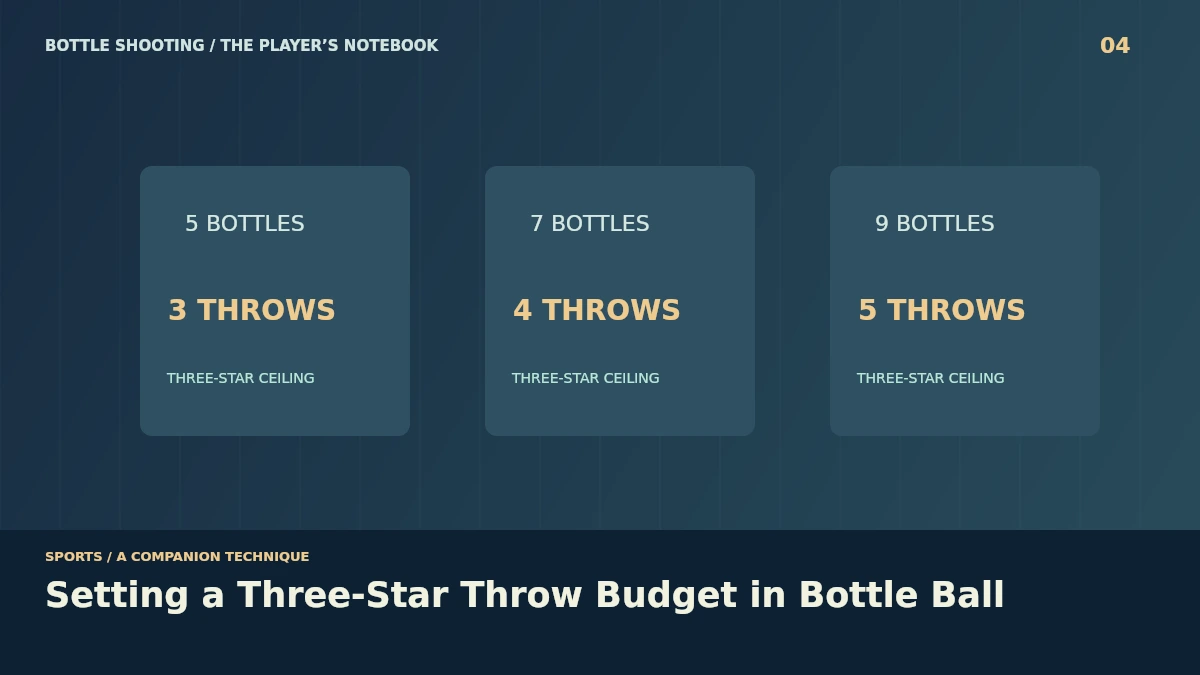
Three stars use 55 percent, rounded up. In Bottle Ball, multiply the arena's starting bottle count by 0.55 and round the result upward to find that run's three-star ceiling.
Five bottles allow three throws. A seven-bottle court allows four, while nine bottles allow five, so the rule expects combinations rather than a separate successful throw for each target on the board.
| Starting bottles | Three-star ceiling | Two-star ceiling |
|---|---|---|
| 5 | 3 throws | 5 throws |
| 7 | 4 throws | 7 throws |
| 9 | 5 throws | 9 throws |
A setup throw still spends part of the budget
Cracking blue glass counts as a throw. If the bottle survives that contact, you have used one launch without reducing the remaining target count, leaving less room for the separate shot needed to finish it.
A barrier-only hit has the same budget cost. It may open an important lane, but the next throw must gain enough value from that opening to justify the extra setup within your chosen star allowance.
Consider a five-bottle opening as an example. Two single-bottle throws leave three targets for the final allowed three-star throw, so check whether a basketball can actually intersect that remaining group before committing the second single.
Bonus points do not increase the ceiling
A rebound adds points when glass shatters. It does not return the throw or raise the star threshold, which means a difficult bounce route can improve score while making the three-star target harder to reach.
Gold replenishes a football rather than a turn. The extra ball keeps ammunition available, but the launch spent breaking gold still remains in the throw count used for the final star award.
Choose a practice goal before the first launch
Start with a clean completion if needed. A one-star clear gives you a chance to study trajectories and barriers before trying a tighter route that depends on several bottles sharing the same basketball path.
Then replay with the count in view. Identify the intended combinations, reserve one throw for any required setup and watch whether a cracked bottle forces the plan to exceed the allowance you calculated at the beginning.
For point calculations, read the rebound bonus guide, or study reinforced-glass damage when a surviving bottle breaks your budget. Browse the sports category to return to the court for another attempt at its star allowance, or use the Bottle Shooting homepage to switch to a different bottle challenge afterward.