Choosing a Sports Ball for Each Bottle Target
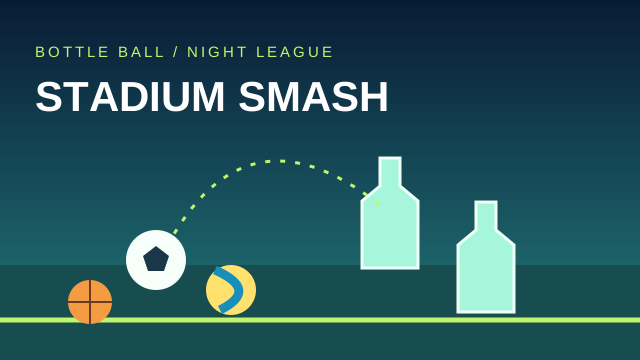
Football, volleyball and basketball share a launch point, but their flight paths differ. Choose a ball for the route in front of you.
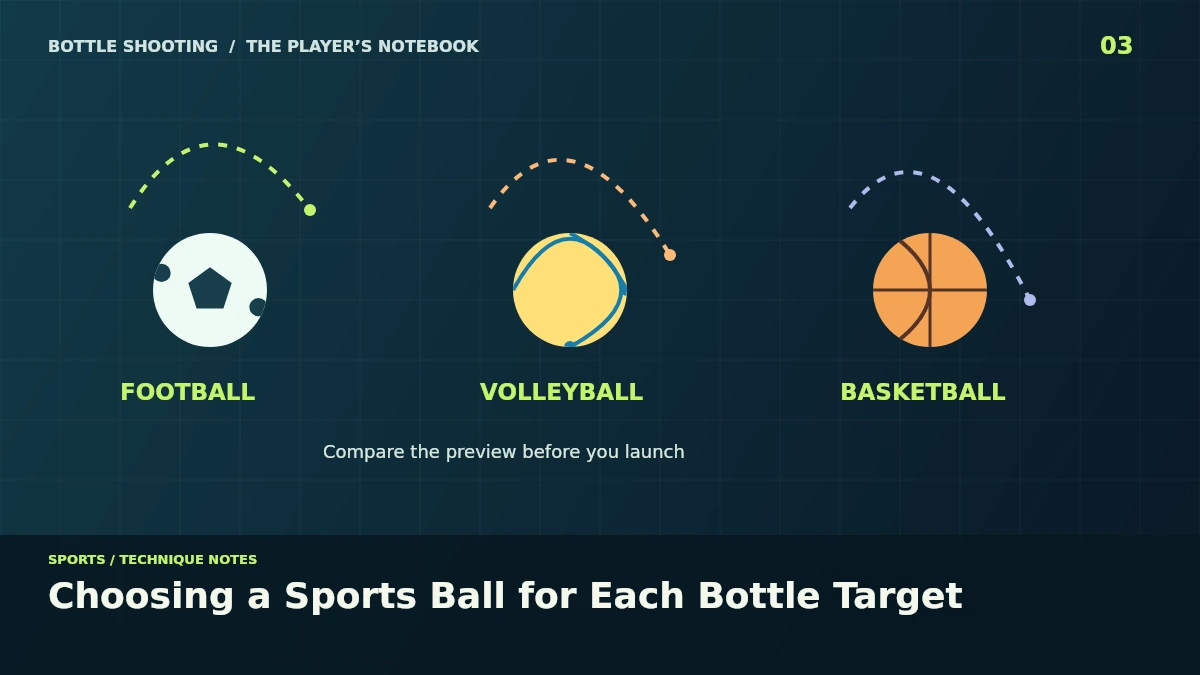
The same slider values produce different throws
Watch the guide when you switch. In Bottle Ball: Stadium Smash, the selected ball changes launch speed, gravity and collision size, so one saved angle does not fit all three sports.
The football makes a useful reference. Its full-power speed is 1,000 internal units per second, with gravity at 650, while the volleyball uses 920 and 520 for a slower, floating flight.
The basketball drops under higher gravity. Its speed is 980 and gravity is 850, which means you should reread the preview before using it for a shelf you reached with the volleyball.
| Ball | Damage per contact | Floor rebounds | Bottle contact behavior |
|---|---|---|---|
| Football | 1 | 1 | Stops at the first bottle |
| Volleyball | 1 | 2 | Stops at the first bottle |
| Basketball | 2 | 2 | Can continue for three contacts |
Pick a route, then a ball
Consider a blue bottle behind foam. A basketball can destroy an intact barrier with one impact and still continue toward glass, provided the arc and the remaining contact allowance reach that second object.
A high shelf asks another question. The volleyball's lower gravity offers a different curve over the defense, but its first bottle contact ends the throw even if that reinforced bottle survives the hit.
The football has more starting supply. Each arena starts with as many footballs as bottles, plus three volleyballs and three basketballs, so reserving the limited basketballs can prevent an awkward finish.
What a wider ball changes
The volleyball has the largest collision radius. Its 16-unit radius can catch the edge of a target or a foam block along a lane that the 13-unit football travels through without contact.
That difference cuts both ways. Extra reach can help with ordinary glass, but it can also turn a narrow obstacle gap into a collision before the ball arrives at the bottle shelf.
Use the guide as your first check. It previews the selected ball's route and first obstruction, while the moving target can still change position between your preparation and the eventual contact.
Try a three-ball comparison
Choose one stationary bottle at kickoff. Keep angle and power unchanged while inspecting each preview, then launch a ball and compare its actual arrival with the path you expected from those settings.
Change only one setting afterward. This short exercise separates the ball's physics from your input changes and gives you a reference before wind, reinforced bottles and shifting shelves enter the later arenas.
For the scoring side, read when a rebound earns extra points; for another material system, see brick contact planning. Browse the sports games category or use the Bottle Shooting homepage to choose a different challenge.